Abercrombie & Fitch and Mike Jeffries’ Exclusion Brand
Abercrombie & Fitch turned social rejection into a source of status through selective hiring, restricted sizing, hostile store environments, and its internal Look Policy. The decisive moment came in January 2006, when CEO Mike Jeffries placed that operating philosophy permanently on the public record during an interview with Salon. The strategy generated enormous commercial value while consumers still desired the brand’s approval, then became a structural liability after the culture changed and the comments resurfaced in 2013. Abercrombie recovered only after dismantling the exclusionary system and rebuilding the company around broader access and customer demand.
The windows were blacked out because natural light had no place in the environment Abercrombie & Fitch wanted to create. Inside, electronic music ran at club volume while Fierce cologne saturated the walls, carpet, and employees. Conversation became difficult, orientation became uncertain, and the store demanded a small act of submission before a customer touched a single piece of clothing.
For the teenagers the brand wanted, that discomfort carried a promise. Endure the threshold and the company might recognize you as someone who belonged. Everyone else received the opposite message with equal clarity.
Abercrombie built a room that rejected certain customers automatically.
The environment is often remembered as an eccentric relic of early-2000s retail, full of sensory excess that now seems faintly absurd. The darkness, volume, fragrance, hiring practices, and limited sizing formed a coordinated system, however. Each element expressed the same governing belief: desire could be manufactured by making approval scarce.
For years, the company was right.
The Architecture of Rejection
A peak-era Abercrombie store functioned as a controlled social threshold. The clothing mattered, but recognition was the deeper product. Customers weren’t merely choosing shirts or jeans. They were asking the brand to confirm that they belonged among the attractive, socially secure, all-American young people presented in its imagery.
That confirmation became more valuable because the company deliberately withheld it from others. Blacked-out windows separated the store from the ordinary mall outside, while the loud music prevented the space from feeling relaxed or universally welcoming. The heavy fragrance announced the brand before the merchandise came into view. Each element filtered the audience before an employee needed to speak.
Customers who enjoyed the environment experienced its hostility as excitement. Those who found it unpleasant had received the intended message. The store wasn’t failing to provide welcoming service. It was selecting the customers whose approval mattered to the brand.
That distinction changes how Abercrombie’s later collapse should be understood. The company didn’t drift away from an inclusive retail model or lose control of an otherwise hospitable experience. It executed its original logic with remarkable consistency. The vulnerability that eventually damaged the business was already present inside the success.
The room worked because the surrounding culture still wanted admission.
The Machine and Its Margins
Les Wexner acquired Abercrombie out of bankruptcy in 1988, when it was a struggling hunting and outdoor goods business with little cultural relevance. In 1992, he installed Mike Jeffries as CEO and gave him the task of rebuilding the company. Jeffries narrowed the audience and made that restriction visible.
Most retailers treat a larger addressable market as an advantage. Jeffries understood that teenage status could follow a different economic logic. If the clothing became too available, it might lose its power as evidence of belonging. Exclusion could increase desire among those who remained eligible for the brand’s approval.
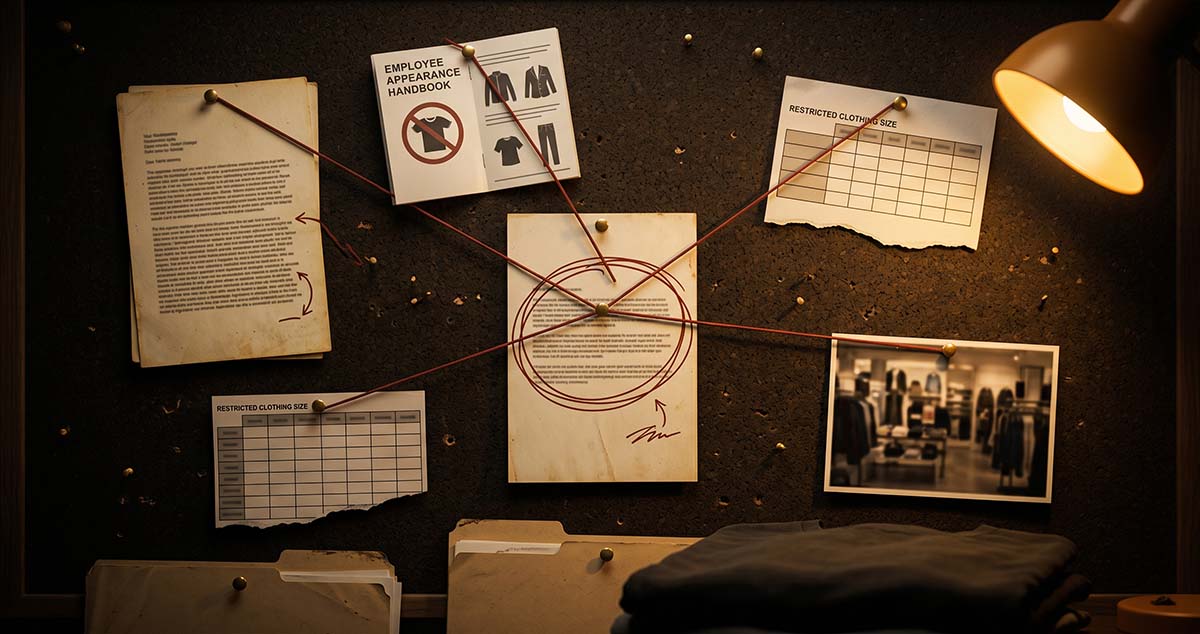
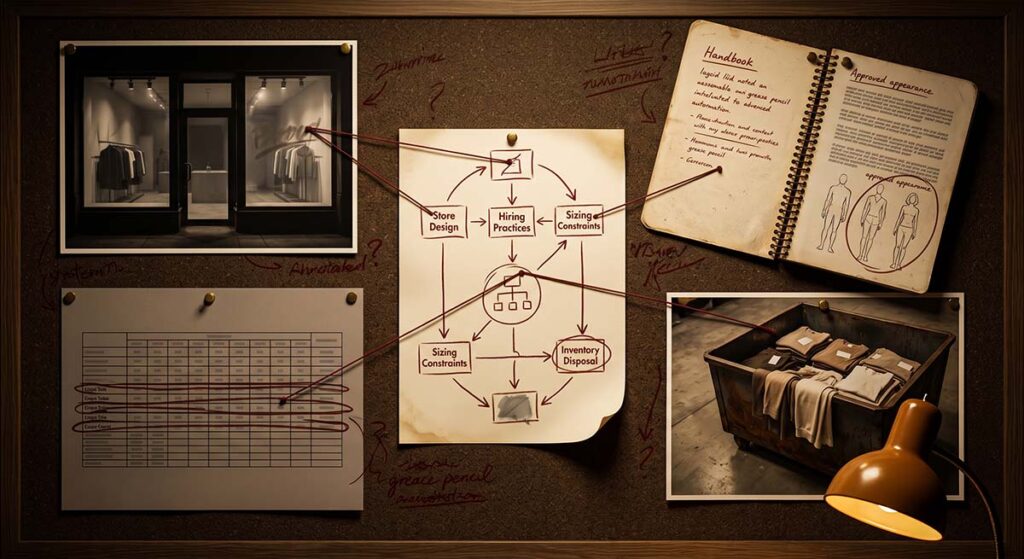
The company enforced this philosophy through its operations. An internal Look Policy specified appearance requirements for store workers, who were officially classified as models. Corporate managers visited stores and evaluated whether employees matched the desired image. Thin, white applicants were disproportionately favored for visible positions, turning employment itself into another signal about who represented the brand.
The product assortment followed the same logic. Women’s XL and XXL sizes were removed rather than stocked in smaller quantities. Their absence communicated that universal access would weaken the clothing’s function as a status marker. Customers who couldn’t fit the company’s preferred physical profile were excluded before they reached the fitting room.
Unsold and damaged inventory was reportedly destroyed rather than donated. Allowing unwanted clothing to reach the wrong bodies or communities threatened the social meaning attached to the brand. The cruelty wasn’t a side effect of the business model. It was the mechanism.
That mechanism produced extraordinary results. Abercrombie grew from an $85 million company in 1992 into an independent retail powerhouse whose stores became fixtures in American malls. Its imagery and clothing carried enough cultural authority to provoke imitation and aspiration, while the resentment surrounding the brand often strengthened its position.
A status symbol requires people outside the boundary who understand what the boundary means. Jeffries turned adolescent insecurity into an economic resource. Abercrombie sold clothing, but its margins depended on a more volatile commodity: the fear of being excluded.
The Statement on the Record
Mike Jeffries gave an interview to Salon in January 2006 and described Abercrombie’s desired customer as the attractive, all-American kid. He also stated that many people didn’t belong in the company’s clothing and couldn’t belong. The comments reflected an operating philosophy he was willing to explain publicly and in detail.
That decision placed the company’s internal logic permanently on the record. Exclusion had already shaped the stores, staffing, sizing, and inventory practices. The interview connected those decisions to an explicit executive belief and preserved the connection in Jeffries’ own words.
The decisive moment in the Abercrombie case therefore occurred seven years before the widespread backlash. Jeffries converted an internal philosophy into a public declaration in 2006. The quotes appeared in print, and the public response was negligible.
Abercrombie continued expanding. Customers kept buying, investors kept rewarding the company, and global revenue reached approximately $4.5 billion by 2012. The exclusion strategy had been described openly and tested in the market without producing a meaningful commercial penalty.
The silence confirmed that the strategy worked.
The interview created a vulnerability whose danger depended on the culture surrounding it. A statement doesn’t carry a fixed commercial meaning forever. Its effect depends partly on the values and assumptions of the audience receiving it.
In 2006, Jeffries’ comments described a system that many consumers already understood. Some found the company arrogant, but arrogance was part of its attraction. The document existed in public while the business continued to thrive, so few people treated it as evidence of an approaching crisis.
The fuse was already in place.
When the Culture Stops Complying
An industry analyst resurfaced the Salon comments in May 2013 while criticizing Abercrombie’s refusal to serve larger customers. He uncovered no secret recording or private memorandum. He returned the company’s own public explanation to the market.
The argument remained intact, but the environment around it had changed. Social media had developed into an infrastructure for rapid consumer organization, and body-positivity advocacy had gained greater visibility. People who once experienced Abercrombie’s judgment privately could now compare their experiences publicly and distribute them at scale.
The brand’s approval also carried less authority. Younger consumers had begun questioning why a retailer should define who deserved fashionable clothing or visible employment. Rejection no longer guaranteed that the rejected person would continue seeking admission.
The 2006 quotes arrived in 2013 as evidence.
Activists, commentators, psychologists, and former customers didn’t need to invent a hostile interpretation of the company. Jeffries had already supplied the language. They only needed to connect it to the operating practices people had experienced for years.
The controversy exposed the complete system. Dark stores, restricted sizing, selective hiring, and the Look Policy could no longer be dismissed as disconnected examples of bad judgment. They were the practical expression of a philosophy the CEO had voluntarily defended.
Abercrombie suffered fourteen consecutive quarters of declining comparable-store sales, while its stock lost substantial value. One resurfaced interview didn’t single-handedly cause every financial problem. It revealed how little flexibility remained inside a model built around exclusion.
Abercrombie had created a form of value that depended on social inaccessibility. Economists use the term Veblen good for products whose desirability increases partly because their price or restricted availability signals status. The mechanism works only while consumers value the authority controlling access.
Once Abercrombie’s inaccessibility became culturally toxic, its value inverted. The same behaviors that once made the company appear selective began making it look obsolete and cruel. The darkness lost its exclusivity, the narrow sizing lost its aspirational force, and the Look Policy lost any remaining appearance of discipline.
The system itself had barely changed. Its interpretation had.
A business can replace an advertisement quickly or issue an apology for a statement. Abercrombie faced a deeper adaptation problem because the rejected belief had been integrated into its stores, staffing, products, and inventory decisions. Modernizing the message required dismantling the machinery behind it.
When the culture stopped assigning value to Abercrombie’s judgment, the company discovered that judgment was much of what it had been selling.
The Reckoning
Mike Jeffries left Abercrombie & Fitch in December 2014, but the legal consequences of the company’s policies continued after his departure. Samantha Elauf, a Muslim teenager who wore a hijab, had applied for a sales position at an Abercrombie store in Tulsa, Oklahoma. The company denied her the job because the headscarf conflicted with its Look Policy.
The dispute reached the United States Supreme Court. In 2015, the Court ruled 8 to 1 against Abercrombie, confirming that the company couldn’t avoid its obligations under employment law by failing to ask directly about an applicant’s religious needs. The decision showed that the operating system created under Jeffries had become a legal liability as well as a commercial one.
Fran Horowitz inherited the task of rebuilding the company after becoming CEO in 2017. She expanded sizing, brightened stores, reduced the overpowering fragrance, and improved inventory management. The company increasingly designed products around what customers wanted rather than around a rigid social ideal imposed from above.
The recovery required more than a softer advertising campaign. Abercrombie had to reverse the operational choices that once made its positioning unusually coherent. Broader access became part of the product, the store environment, and the customer experience.
By 2025, the company had reported record net sales of approximately $5.3 billion. The reinvented business surpassed the revenue achieved during the exclusion era. Its recovery came through expanding access rather than restricting it.
The brand that made people feel unworthy could survive only by deciding they were worthy of serving.
Commercial recovery doesn’t erase the people who absorbed the old strategy. The balance sheet can demonstrate that reinvention worked, but it can’t determine what a company owes those it deliberately humiliated or excluded. A profitable reversal proves that the old system was unnecessary. It doesn’t settle the moral debt created while that system was still useful.
Federal prosecutors indicted Jeffries in October 2024 on sex-trafficking charges connected to conduct alleged to have occurred during and after his tenure. That criminal case stands apart from the branding argument, but it adds a darker coda to a history already defined by concentrated power and institutional permission. The evidence file surrounding his leadership became larger than the retail controversy alone.
Abercrombie failed because it built a machine that ran on someone else’s shame. Shame, as the company eventually discovered, isn’t a renewable resource.
Frequently Asked Questions
What happened to Abercrombie & Fitch under Mike Jeffries?
Mike Jeffries rebuilt Abercrombie & Fitch around deliberate exclusion through restrictive sizing, selective hiring, sensory store design, and aspirational imagery. The strategy produced major growth, then became commercially and legally damaging as cultural attitudes changed. The company recovered only after reversing much of the system he created.
What was the Abercrombie exclusion strategy?
The Abercrombie exclusion strategy treated rejection as a source of brand value. The company limited who could wear its clothing, work visibly in its stores, or feel comfortable inside them. Manufactured scarcity made its approval appear valuable while tying the business to cultural assumptions that eventually became unacceptable.
What was Abercrombie’s Look Policy?
The Look Policy governed how Abercrombie store employees were expected to look and dress. Workers were officially classified as models, and visible positions disproportionately favored thin, white applicants. The policy later became central to discrimination disputes, including the Supreme Court case involving Samantha Elauf.
Why was Mike Jeffries’ 2006 Salon interview the decision point?
The 2006 Salon interview transformed Abercrombie’s internal philosophy into a permanent public declaration. Jeffries explained that the company was designed for attractive, all-American customers and that many people couldn’t belong. The immediate response was limited, but the published remarks became damaging evidence when they resurfaced seven years later.
What is a Veblen good, and how did it apply to Abercrombie?
A Veblen good gains desirability partly because it is expensive, scarce, or socially inaccessible. Abercrombie used similar status logic by restricting access and making its approval difficult to obtain. Once consumers began viewing that inaccessibility as cruel rather than aspirational, the mechanism inverted and weakened the brand.
Did Abercrombie’s exclusionary strategy actually work?
Yes, for a significant period. The strategy helped transform Abercrombie from a failing retailer into a powerful youth status brand generating billions in annual revenue. Its success depended on cultural permission that didn’t last, while its operational rigidity made adaptation extremely difficult once that permission disappeared.
How did Abercrombie & Fitch recover after Mike Jeffries left?
Under Fran Horowitz, Abercrombie expanded sizing, brightened its stores, reduced the overpowering fragrance, improved inventory management, and designed products around customer demand. By 2025, the company had reported record net sales. Its recovery came through dismantling the exclusionary principles that once defined its distinctiveness.
What can other brands learn from the Abercrombie case?
A powerful brand belief rarely remains confined to advertising. It can spread into hiring, product design, distribution, and customer experience. That consistency may generate growth, but it can also make a company dangerously inflexible. Brands must separate enduring strategic value from assumptions that work only under temporary cultural conditions.