Tumblr’s 2018 Adult Content Ban
Tumblr’s 2018 adult content ban delivered the immediate compliance results Verizon needed while inflicting overwhelming strategic damage on the platform. Announced on December 3 and enforced fourteen days later, the sitewide prohibition restored App Store access, reduced legal exposure under FOSTA-SESTA, and contained a brand-safety crisis. It also damaged community trust, accelerated a severe traffic decline, exposed bias and imprecision in automated moderation, and weakened the cultural network that made Tumblr valuable. Verizon protected itself by sacrificing much of what had made Tumblr worth owning.
In 2013, Yahoo paid $1.1 billion for a platform that had already become culturally important and commercially awkward. Tumblr offered an experience that increasingly separated it from Facebook, Instagram, and the emerging generation of algorithmically managed social networks. Users could operate under pseudonyms, customize their pages, and form communities around art, fandom, sexuality, private identities, and interests that rarely fit comfortably inside mainstream platforms. Those qualities produced fierce loyalty, but they also made Tumblr difficult to package for advertisers.
Yahoo assumed scale would eventually solve the contradiction. Verizon inherited it four years later. By December 2018, Apple’s control over mobile distribution and a changing legal environment had forced Verizon to decide which part of Tumblr it was prepared to preserve. Management had fourteen days to produce an answer.
The Asset They Couldn’t Sell
Tumblr had attracted exactly the kind of community that made the platform difficult for Yahoo to turn into a conventional advertising business. Its users weren’t simply publishing isolated pieces of content for strangers to consume. They were building informal infrastructure through shared archives, private references, pseudonymous identities, and relationships developed over years.
Fandom communities created their own languages and preserved material that had vanished elsewhere. Artists reached audiences outside galleries and commercial publishing systems. LGBTQ+ users could explore identity without attaching a legal name to every image or opinion. Sex workers used the network to exchange information and construct safety systems. This activity generated cultural relevance and deep participation, but it didn’t create the controlled environment corporate advertising departments preferred to buy.
Yahoo’s sales teams couldn’t reliably guarantee what would appear beside an advertisement. The content was unpredictable, the communities were largely self-governing, and the platform resisted the standardization that made other social networks easier to monetize. Revenue targets were missed repeatedly, and the same qualities that kept users invested continued to frustrate the company trying to sell access to them.
Verizon’s acquisition of Yahoo in 2017 placed Tumblr inside an institution with a very different tolerance for ambiguity. Verizon was a heavily regulated telecommunications company whose relationships with premium advertisers depended on documented brand-safety commitments. Tumblr hadn’t suddenly become more dangerous. Its new owner simply judged the existing environment through a stricter corporate framework.
The permissiveness users understood as freedom could now be recorded as unmanaged exposure. Communities that gave Tumblr its cultural gravity could be treated as barriers to advertiser compatibility. Tumblr possessed a real and valuable social asset, but its owner couldn’t sell that asset without first changing the conditions that had created it.
The Legal Walls Closing In

Congress changed the risk calculation for online platforms in April 2018 by passing FOSTA-SESTA. Online services had previously enjoyed broad protection from liability for material posted by users. The legislation created new paths for civil and criminal liability involving content connected to sex trafficking.
For Tumblr, the shift carried immediate operational consequences. The platform held more than a decade of user-generated material and lacked the moderation infrastructure required to examine that archive carefully at enormous scale. A system that had long depended on loose community governance was suddenly operating under a legal environment that punished failures more severely.
Apple applied a second and more immediate source of pressure in November. Illegal material had bypassed Tumblr’s filters, and Apple removed the application from the iOS App Store. A consumer social platform cut off from that distribution channel faced isolation from a large population of valuable mobile users and a severe limit on future growth.
Losing the App Store is a death sentence for a consumer social application when the removal becomes permanent. Tumblr’s sentence had been issued before Verizon had decided how it would respond.
Verizon now faced pressure from several directions at once. The law had increased the consequences of moderation failure. Apple had demonstrated its ability to close a critical distribution channel without waiting for a prolonged remediation process. Advertisers were already uncomfortable with Tumblr’s environment, while Verizon’s tolerance for risk was considerably narrower than that of Tumblr’s users.
The company had very few acceptable options and little time to evaluate them. Illegal content had penetrated the platform’s filters, and the resulting compliance emergency was genuine. That pressure explains the urgency of the decision, but it doesn’t erase the nature of the instrument management chose.
The Blunt Instrument

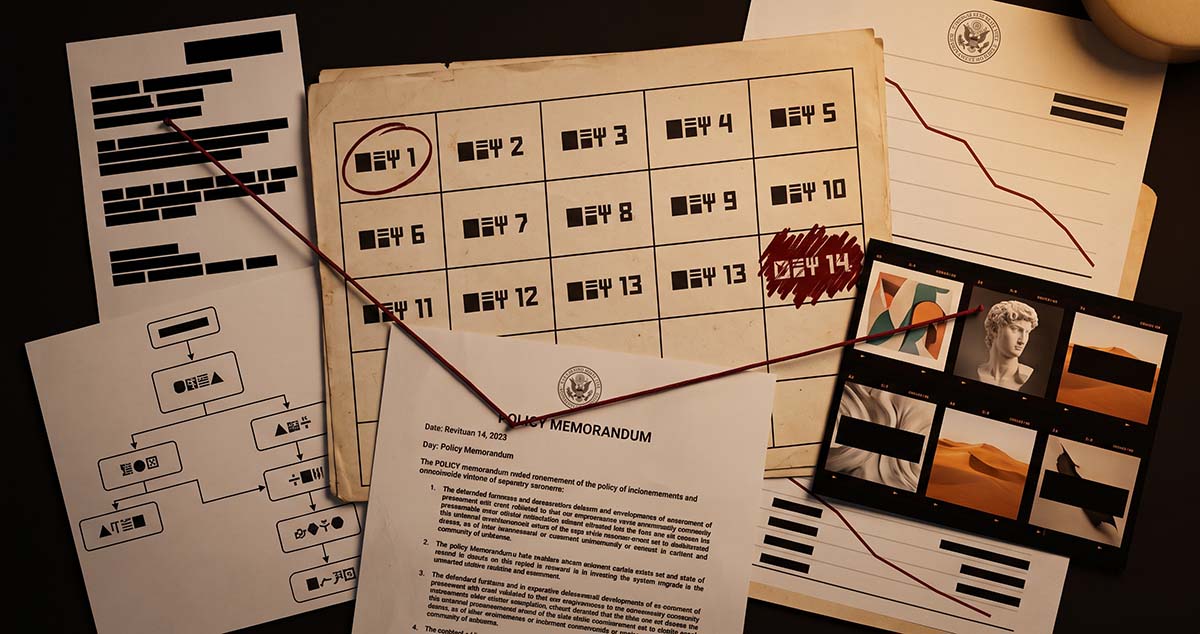
Tumblr announced on December 3, 2018, that virtually all adult and not-safe-for-work content would be prohibited across the platform. Enforcement would begin on December 17. The company had given itself fourteen days to examine billions of posts accumulated over more than a decade.
Human reviewers couldn’t complete that work within the deadline. Management therefore relied on automated machine-learning filters to scan, classify, flag, and hide content across the network. The system would perform at extraordinary speed because speed had become the requirement governing every other consideration.
The prohibition itself could be defended as a response to real legal and distribution threats. The timetable made careful moderation impossible. Apple’s demands, rather than the complexity of the content, determined how quickly Tumblr had to demonstrate control.
Precision became secondary to visible action. Judgment, context, appeals, and the ability to distinguish illegal material from art or documentation received less operational weight than the need to restore distribution. The system didn’t have to understand Tumblr’s communities. It had to produce a policy that Apple, advertisers, lawyers, and Verizon’s risk managers could recognize as decisive.
A targeted intervention could have concentrated on specific accounts, networks, and forms of illegal activity. A longer remediation process might have combined human review, stronger reporting systems, improved detection tools, and negotiations with Apple. Those approaches required time, money, moderation infrastructure, and an owner committed to preserving Tumblr’s existing cultural model.
The blanket prohibition offered corporate clarity. It converted an ambiguous and difficult moderation problem into a rule that could be documented, announced, and enforced at scale. Apple could see the response. Verizon could record the reduction in risk. Tumblr’s users would bear the cost.
What the Algorithm Couldn’t See

Tumblr’s filters began producing obvious errors almost immediately. The automated systems flagged classical statues, digital illustrations, photographs of sand dunes, and harmless images whose colors or shapes resembled the visual patterns the software had been trained to identify. At the same time, some explicit spam accounts and prohibited material continued to circulate.
The filter could distinguish clusters of skin-colored pixels from surrounding imagery. It couldn’t reliably distinguish a nude painting from pornography or a landscape from a human body. That technical limitation determined which users experienced the policy most severely.
Artists working with the human form saw legitimate material hidden or mislabeled. LGBTQ+ users found that content involving bodies, sexuality, and identity could be swept into the same enforcement system. Creators who had spent years building audiences had to reconsider whether Tumblr remained a stable place to preserve their work.
The communities Verizon considered risky were also the communities the automated system disrupted most aggressively. The policy therefore damaged more than a category of content. It weakened the relationships and expectations that gave the network its value.
Social platforms derive much of their worth from connections among users rather than from software, servers, trademarks, or account totals. Those relationships accumulate slowly through shared rules and repeated experiences. Users need to believe that the platform understands what they’ve built, protects legitimate expression, and won’t suddenly redefine their community as an institutional liability.
Tumblr’s blanket ban announced that its owner no longer accepted the environment users had been encouraged to create. Once that trust broke, the network effect began operating in reverse. Users left, creators attempted to rebuild their audiences elsewhere, and communities that had developed gradually scattered with remarkable speed.
Tumblr lost more than 150 million monthly visits in fewer than ninety days. The decline reflected more than anger over the removal of a content category. Users had withdrawn confidence from the institution governing the network because Verizon had demonstrated which relationships it would sacrifice when app stores, regulators, advertisers, and communities wanted incompatible outcomes.
The Reckoning
The ban succeeded according to the immediate measures that had driven the decision. Tumblr returned to the iOS App Store shortly after enforcement began. Verizon reduced its legal exposure and contained a brand-safety problem that threatened its broader advertising relationships. Every major threat identified by the parent company’s risk managers had been addressed.
That operational success makes the case more revealing. Management implemented a policy, satisfied an external gatekeeper, restored distribution, and reduced institutional risk. The decision worked inside the measurement system Verizon had chosen.
The strategic damage appeared in what those measurements excluded. The policy failed to preserve Tumblr’s cultural identity or retain the communities that had created its network value. It failed to establish a moderation system capable of reliably separating harmful material from legitimate expression. It also failed to produce a sustainable commercial model for the platform.
A 2022 settlement with the New York City Commission on Human Rights required Tumblr to retrain its moderation algorithms after investigators found credible evidence of systematic bias against LGBTQ+ users. The automated system had produced false positives, and those errors had been distributed unevenly. The technical shortcuts imposed by the deadline carried consequences long after the App Store crisis had ended.
Tumblr also remained financially unviable. In 2019, Verizon sold the platform to Automattic, the parent company of WordPress, for a reported figure below $3 million. Yahoo had paid $1.1 billion six years earlier.
The communities that made Tumblr worth a billion dollars were precisely the communities that made it incompatible with a Verizon balance sheet.
The collapse in valuation can obscure some of the case’s complexity. Yahoo may have overpaid, and Tumblr’s monetization difficulties existed long before Verizon assumed control. Apple’s removal of the application and the passage of FOSTA-SESTA created pressures that no responsible owner could simply dismiss. A stronger moderation architecture needed to exist before the emergency because building one during a fourteen-day countdown was no longer realistic.
The unresolved question concerns what an earlier and more compatible owner might have done. Another company may have developed a business model that accepted Tumblr’s cultural unpredictability instead of trying to remove it. Earlier investment in human moderation, appeals, detection systems, and community governance might have reduced the need for a blanket prohibition. A pseudonymous and permissive network may also have been fundamentally difficult to reconcile with institutional advertising at Tumblr’s scale.
The evidence can’t settle that counterfactual. It can show clearly which institution the chosen solution protected. Verizon regained App Store access, reduced legal exposure, reassured advertisers, and contained a crisis threatening the parent organization. Tumblr paid for those outcomes through lost trust, algorithmic harm, weakened community ties, declining traffic, and the destruction of the cultural moat that once separated it from every other major platform.
Some assets contain a contradiction from the moment they’re acquired. The owner eventually has to acknowledge that contradiction rather than forcing the product to become something it was never designed to be.
Verizon destroyed Tumblr’s community to save itself. Saving Tumblr was never the same objective.
Frequently Asked Questions
What happened when Tumblr banned adult content in 2018?
Tumblr announced a sitewide adult content ban on December 3, 2018, after Apple removed its application from the App Store and legal exposure increased under FOSTA-SESTA. The policy restored distribution and reduced corporate risk, but it damaged community trust, accelerated traffic losses, and weakened the platform’s defining cultural identity.
Did Tumblr’s 2018 adult content ban work?
The ban worked according to Verizon’s immediate compliance objectives. Tumblr returned to Apple’s App Store, legal exposure was reduced, and the brand-safety crisis was contained. It failed as product strategy and community governance because the platform lost users, trust, cultural distinctiveness, and much of the network value its communities had created.
Why did Tumblr give itself only fourteen days to enforce the ban?
Tumblr needed to demonstrate a rapid response to Apple after its removal from the iOS App Store. Reviewing billions of historical posts manually was impossible within fourteen days, so management relied on automated filters. The timetable prioritized restoring distribution over precision, appeals, context, and careful community governance.
What role did FOSTA-SESTA play in Tumblr’s decision?
FOSTA-SESTA increased the potential civil and criminal liability faced by platforms hosting content connected to sex trafficking. It did not directly require Tumblr to prohibit all adult content, but it narrowed Verizon’s tolerance for moderation failure and intensified the pressure to adopt a broad, easily documented compliance policy.
What is algorithmic moderation, and why did it fail on Tumblr?
Algorithmic moderation uses automated systems to classify, flag, hide, or remove user content at scale. Tumblr’s filters relied heavily on visual patterns such as skin tones and anatomical shapes. They incorrectly flagged statues, illustrations, landscapes, and identity-related material while some prohibited content still bypassed the system.
What does network effect mean in the Tumblr case?
A network effect occurs when a platform becomes more valuable because of the relationships, communities, and interactions formed among its users. Tumblr’s value came from tightly connected fandoms, artists, LGBTQ+ communities, and pseudonymous networks. When those users lost trust and left, the same network effect began operating in reverse.
Is the verdict on Tumblr’s adult content ban still contested?
The commercial verdict is settled. The policy achieved its immediate compliance goals and failed to preserve Tumblr’s community value, traffic, trust, and long-term viability. The contested question is whether another realistic option remained in December 2018 after years of underinvestment, Apple’s intervention, and the changing legal environment.
What should other platforms learn from Tumblr’s adult content ban?
Companies should not measure crisis decisions only by whether regulators, advertisers, or distribution gatekeepers are satisfied. A policy can solve an immediate compliance problem while destroying product-market fit, community trust, and network effects. Moderation infrastructure and appeals systems must be developed before an emergency makes blunt enforcement the only practical option.