
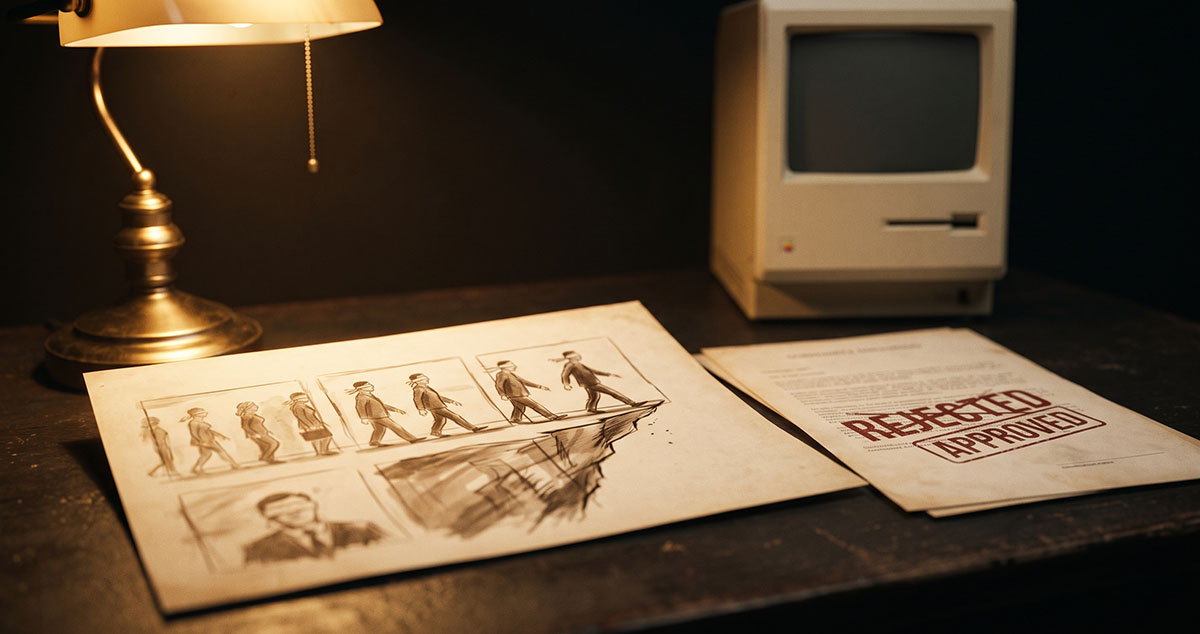
Apple’s 1985 Lemmings Commercial
The Apple “Lemmings” commercial failed as a B2B advertisement and as the flagship launch for Macintosh Office. Apple portrayed corporate buyers as blindfolded conformists while promoting an office system whose central file server wasn’t ready, even after leadership received explicit warnings about the product gap. CEO John Sculley initially stopped the commercial, then reversed himself under pressure from Steve Jobs and his allies, removing the institutional safeguard that had already worked. AppleTalk and the LaserWriter later helped create desktop publishing, but that technological recovery doesn’t redeem the advertisement or turn the failed Macintosh Office launch into a success.
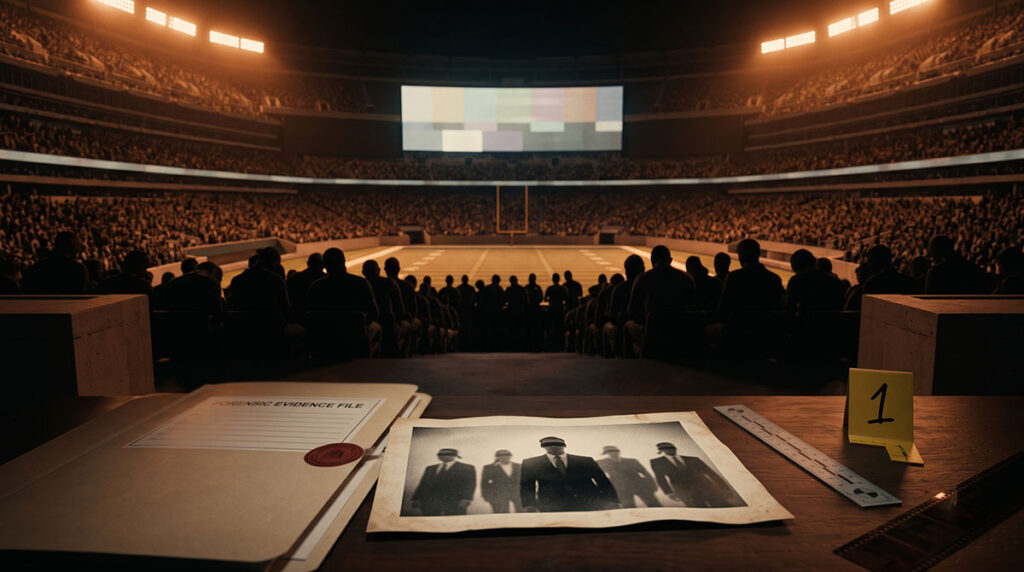
Ninety thousand people cheered when Apple replayed “1984” inside Stanford Stadium. Apple expected that reaction. The commercial had become evidence of what the company believed about itself: fearless, culturally alert, and willing to confront the systems everyone else accepted.
A few minutes later, Apple showed the crowd its next Super Bowl commercial.
The cheering stopped.
The new advertisement followed a line of blindfolded business executives marching in formation toward a cliff. They whistled out of tune. One by one, they disappeared over the edge. Apple called it “Lemmings.” It was the silence of ninety thousand people deciding, in real time, what they had just seen.
That silence is usually remembered as the reaction to a bad advertisement. The record points to a deeper failure. Apple had already rejected “Lemmings” internally. The chief executive had ordered the airtime sold. The marketing promise had already moved beyond the product.
The commercial still aired.
John Sculley’s reversal is the center of the case.
The Room That Went Quiet
Apple entered Super Bowl XIX with the cultural authority of “1984” behind it. The earlier commercial had positioned the Macintosh user as someone willing to break from conformity. The audience was the hero. Apple simply gave that hero a machine.
“Lemmings” reversed the relationship.
The buyers Apple needed became blindfolded, obedient figures unable to see the cliff directly in front of them. The imagery left little room for interpretation. Apple wanted corporate buyers to reconsider IBM, but the commercial implied that people choosing IBM were too mindless to recognize their own destruction. That distinction mattered because Apple was addressing corporate purchasing departments responsible for continuity, compatibility, and risk. These buyers weren’t searching for rebellion as a personal identity. They were responsible for keeping businesses operational.
They bought what worked.
The silence at Stanford Stadium became the first piece of evidence. Apple believed it was challenging conformity. The crowd had just watched the company insult the people it needed to persuade.
The Machine They Needed to Sell
The Macintosh had shipped in January 1984, but the corporate market had little reason to trust it. The original machine ran hot because it lacked an internal fan. It came with 128 kilobytes of memory and couldn’t run the business software corporate users already depended on. IBM’s PC offered expandable memory and supported Lotus 1-2-3, a familiar tool for people managing budgets, forecasts, and quarterly reporting.
The real gap was operational credibility.
Apple needed to persuade businesses that the Macintosh could function as more than an elegant personal computer. Macintosh Office was supposed to provide the answer. The proposed system would connect computers through AppleTalk, produce high-quality documents with the LaserWriter, and offer shared storage through a central file server. On paper, the strategy addressed a genuine weakness. Enterprise buyers needed to see a working office system rather than an isolated machine.
Apple’s marketing department decided that a stronger message could create the credibility the unfinished product lacked. That diagnosis shaped everything that followed. Product readiness should have established the limits of the promise. Apple instead treated advertising as the force that could pull the product into credibility.
The company returned to Chiat/Day, the agency behind “1984,” and requested another high-concept Super Bowl commercial. The assignment carried an obvious burden. The new work would be measured against one of the most celebrated advertisements Apple had ever made. The deadline approached before the agency found an idea capable of carrying that weight.
The Check the Marketing Department Wrote
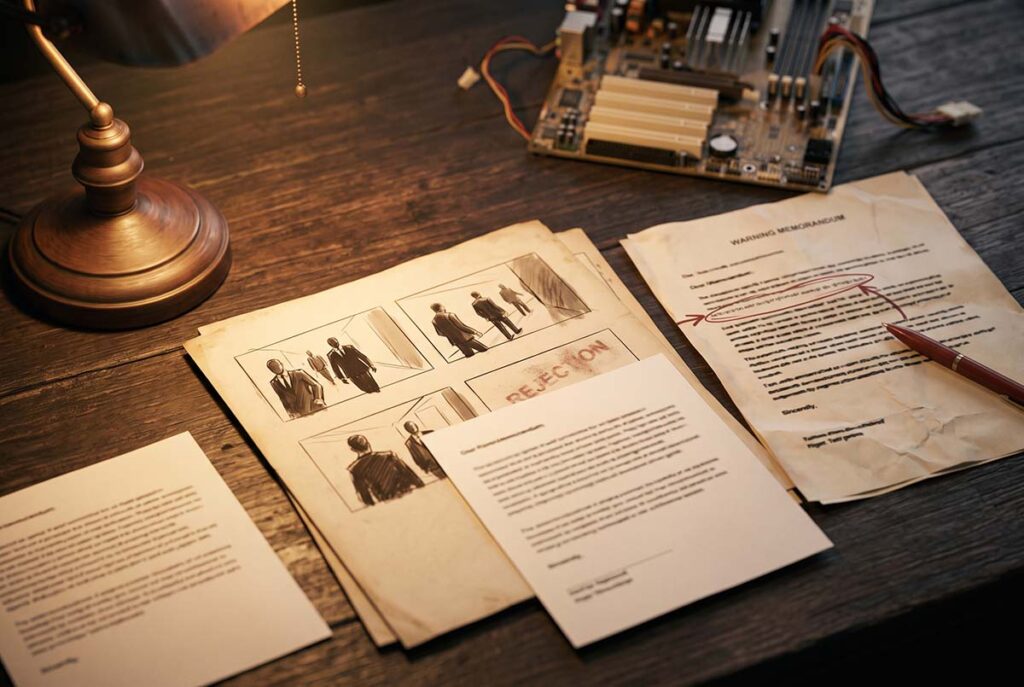
Chiat/Day hadn’t created the eventual concept for Macintosh Office. The agency had originally developed the storyboard for General Electric. The idea was rejected, set aside, and later retrieved as Apple’s deadline closed in. Its recycled origin didn’t automatically make it unusable. It did mean the concept hadn’t grown from the specific problem Apple needed to solve.
Apple needed to build trust with cautious business buyers. The storyboard treated those buyers as symbols of obedience and failure.
John Sculley saw the finished cut. Apple’s board saw it. They didn’t like it. Sculley ordered the Super Bowl slot sold back to the network. That decision should have contained the failure. The advertisement had reached the people responsible for the company, and the institutional safeguard had worked. Leadership recognized the risk and stopped the broadcast.
Steve Jobs still possessed the political capital created by “1984,” and he chose to spend it on “Lemmings.” Jobs and his allies pushed against Sculley’s order. Their success with the earlier commercial gave their creative judgment unusual authority inside Apple. Sculley reversed himself.
The CEO said no. The CEO then said yes.
That sequence matters more than the familiar observation that the advertisement was misguided. Weak concepts reach executives every day. The decisive failure came when Apple recognized the danger and removed the safeguard that could have contained it.
The company also understood the product risk. A Chiat/Day copywriter warned Apple that its marketing promises were moving faster than its engineering. The proposed office system depended on technology the company couldn’t deliver. Advertising it at Super Bowl scale would create a promise the product organization might be unable to keep. Apple’s leadership heard the warning and trusted its own judgment instead.
The executives knew the advertisement could alienate business buyers. They knew the product behind the claim was incomplete. The authority of Apple’s marketing instincts had become stronger than the objections around them.
What the Evidence Told Them
Apple paid $900,000 for sixty-two seconds of airtime and reached an audience of more than 100 million people. The scale removed any possibility of containment. An internal failure of judgment became a national statement about how Apple viewed the enterprise market.
“Lemmings” borrowed the visual language of conformity that had made “1984” effective, but it reassigned the roles. In “1984,” the consumer broke free from a system imposed upon them. In “Lemmings,” the consumer became the conformist. The business buyer became the blindfolded figure walking toward the cliff. Apple had repeated the surface language of its previous success while changing the audience’s position inside the story.
The enterprise market runs on risk aversion, and Apple had just told its most risk-conscious prospects that buying IBM was equivalent to walking off a cliff blindfolded. Market research after the broadcast confirmed what the silence inside Stanford Stadium had already suggested. Among business professionals, “Lemmings” was the most hated commercial of the Super Bowl.
The most hated.
That response exposes the limit of provocation as a strategy. Controversy can focus attention on an argument. Contempt ends the relationship before the argument begins. A brand doesn’t win customers by telling them they’re fools for not already being customers. Apple needed enterprise buyers to reconsider the Macintosh. It gave them a reason to question whether the company understood their responsibilities at all. Corporate purchasing decisions involved software, compatibility, support, and organizational exposure. Apple portrayed them as failures of courage because that explanation was more flattering than admitting its product wasn’t ready.
The Wreckage and What Survived It
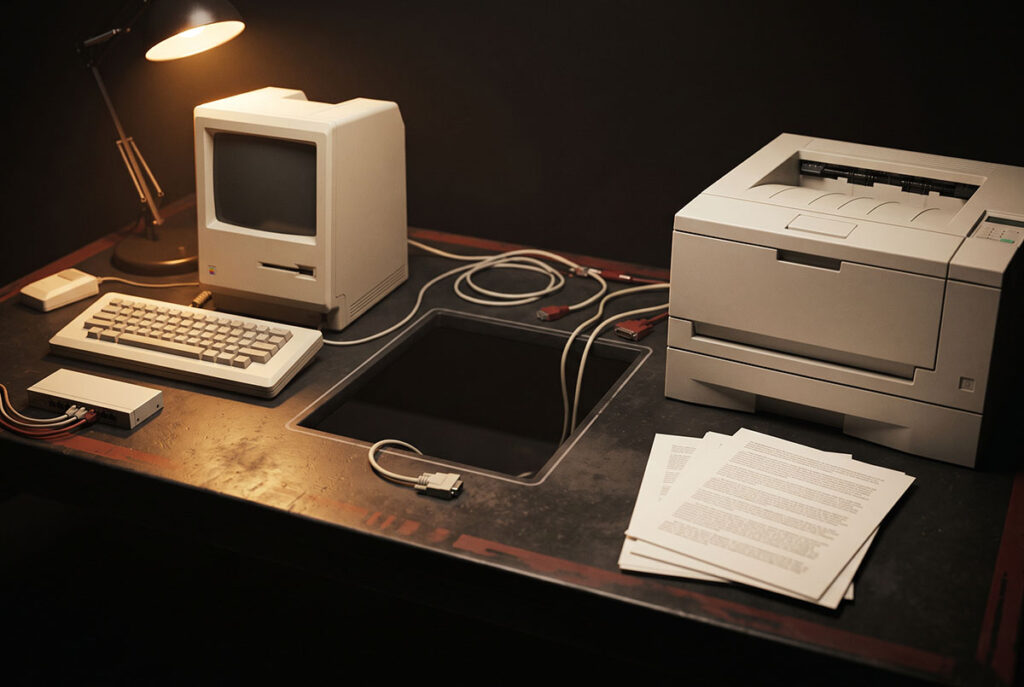
The copywriter’s warning was specific. Apple would be held accountable if it advertised an ecosystem it couldn’t deliver.
The product was absent.
Macintosh Office depended on a central file server that would make shared storage possible across the proposed network. That server never shipped. The integrated office system had no central infrastructure. Apple advertised a system and shipped components.
The financial and organizational crisis that followed was broader than one commercial. Macintosh sales problems, product failures, internal conflict, and manufacturing pressures were already converging. “Lemmings” didn’t single-handedly cause everything that happened to Apple in 1985. The commercial publicly expressed the same dysfunction.
Apple reported a $40 million quarterly loss, laid off 1,200 employees, and closed three manufacturing facilities. The board stripped Jobs of operational authority in the spring. By the summer, he had resigned from the company he helped build. The ad cost nine hundred thousand dollars and the company’s founder. The math was uncomplicated.
The case doesn’t end there. Two parts of Macintosh Office survived the failed launch and became more useful than the system Apple had originally imagined. AppleTalk provided inexpensive networking built into the Macintosh. The LaserWriter offered high-quality laser printing through PostScript, allowing printed output to reflect what users saw on their screens. Paired with PageMaker, those technologies allowed users to create professional page layouts and print them directly from a Macintosh. A small business or independent designer could perform work that had previously required specialized publishing equipment.
Desktop publishing emerged from the pieces left behind.
AppleTalk and the LaserWriter gave the Macintosh a viable role and helped secure Apple’s position in the creative market. The machine found users who valued what the surviving technology could actually do. The successful use of those components doesn’t convert Macintosh Office into a successful launch. It doesn’t vindicate the advertisement or make the original strategy secretly correct. An unplanned use of the remaining technology survived the promised system. The Macintosh saved itself by finding the users Apple’s advertising had refused to speak to.
That recovery separates the value of the technology from the judgment used to market it. Useful engineering survived an arrogant message. Later adoption proved that the components had merit. It didn’t prove that Apple understood the market it addressed in January 1985.
The company’s office future survived in another form. The commercial remained what the evidence showed it to be.
Apple didn’t stumble into a bad ad. It overruled the one person in the room who said stop, and then let the product confirm everything the ad had implied.
Frequently Asked Questions
What happened with Apple’s 1985 Lemmings commercial?
Apple’s 1985 “Lemmings” commercial portrayed corporate buyers as blindfolded conformists marching off a cliff while promoting Macintosh Office. CEO John Sculley initially stopped the ad, then reversed himself under pressure from Steve Jobs and his allies. The commercial aired, alienated business buyers, and promoted an office system Apple couldn’t fully deliver.
Did the Apple Lemmings commercial work?
No. The Apple Lemmings commercial failed as a B2B advertisement and as a Macintosh Office launch. Research found it was the most hated Super Bowl commercial among business professionals. The later success of AppleTalk and the LaserWriter complicates the aftermath, but it doesn’t redeem the commercial or make the original launch successful.
What was Macintosh Office?
Macintosh Office was Apple’s proposed networked workplace system for business customers. It combined Macintosh computers, AppleTalk networking, the LaserWriter printer, and a central file server for shared storage. The server never shipped, so Apple advertised an integrated office system but delivered only some of its components.
What was AppleTalk?
AppleTalk was an inexpensive networking protocol built into the Macintosh. It allowed Macs and related devices to communicate without the complex infrastructure common in larger corporate systems. Although Macintosh Office failed as a complete product concept, AppleTalk survived and later became part of the technology combination that supported desktop publishing.
What was the LaserWriter, and why did it matter?
The LaserWriter was Apple’s high-quality laser printer, built around Adobe PostScript technology. When paired with Macintosh computers and PageMaker, it let users create and print professional page layouts directly. That practical use helped establish desktop publishing, even though the larger Macintosh Office system advertised by Apple never fully materialized.
Why did John Sculley allow the Lemmings commercial to air?
John Sculley and Apple’s board rejected the commercial, and Sculley ordered the Super Bowl airtime sold. Steve Jobs and his allies pushed back, using the political authority gained from “1984.” Sculley changed course, removing the safeguard that had already contained the risk.
Is the verdict on Apple’s Lemmings campaign settled or contested?
The verdict is settled concerning the advertisement and launch: both failed. The contested element concerns what followed. AppleTalk and the LaserWriter later helped create desktop publishing and gave the Macintosh a viable market. That technological recovery was real, but it was unplanned and doesn’t excuse the original judgment.
What should other companies learn from the Lemmings campaign?
Other companies should separate creative confidence from product readiness and treat internal dissent as evidence rather than obstruction. Provocative advertising can’t repair an incomplete offer, and insulting cautious buyers won’t make them less cautious. The Apple case shows how a recognized risk becomes a public failure when leadership removes its own institutional check.