
Why the Blank Coat Costs $3,000 More
Quiet luxury logo erasure works because it turns visible absence into a pricing filter. Instead of broadcasting status through a recognizable mark, the brand transfers recognition to the observer, making value legible only to people with the cultural capital, material fluency, and product knowledge to decode it. Removing the logo can strengthen pricing power by restricting recognition, but it also removes the brand shield that used to absorb blame when product reality failed. The absence becomes the signal because it decides who can see value, who cannot, and who is left exposed when silence is not backed by discipline.
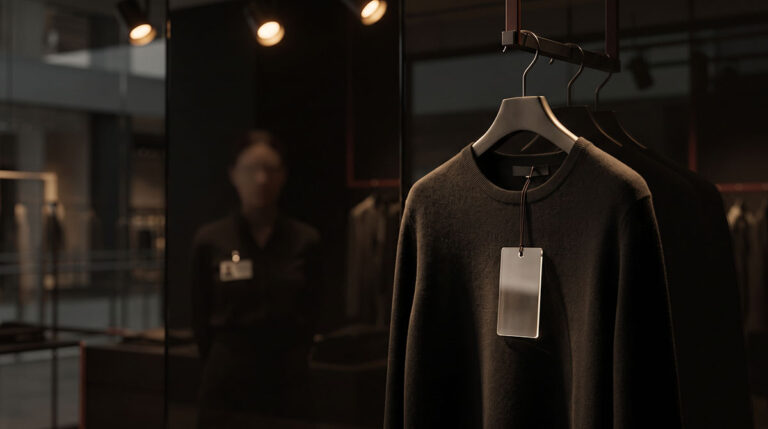
Two cashmere coats hang side by side in a case. The first carries a monogram, repeated across the weave, unmistakable from thirty feet away. The second is blank. No stitching, no mark, nothing that names the maker.
Run your hand across both and the fabric feels the same. Look at the tag and it isn’t. The monogrammed coat costs $4,000. The blank one costs $7,000.
The manufacturer isn’t charging you for the coat. It’s charging you $3,000 to make sure no one else knows you’re wearing it. That gap is the clearest expression of a shift that’s been happening at the top of nearly every market for decades, one that runs through fashion, consumer goods, and increasingly, enterprise software.
The Job a Logo Used to Do
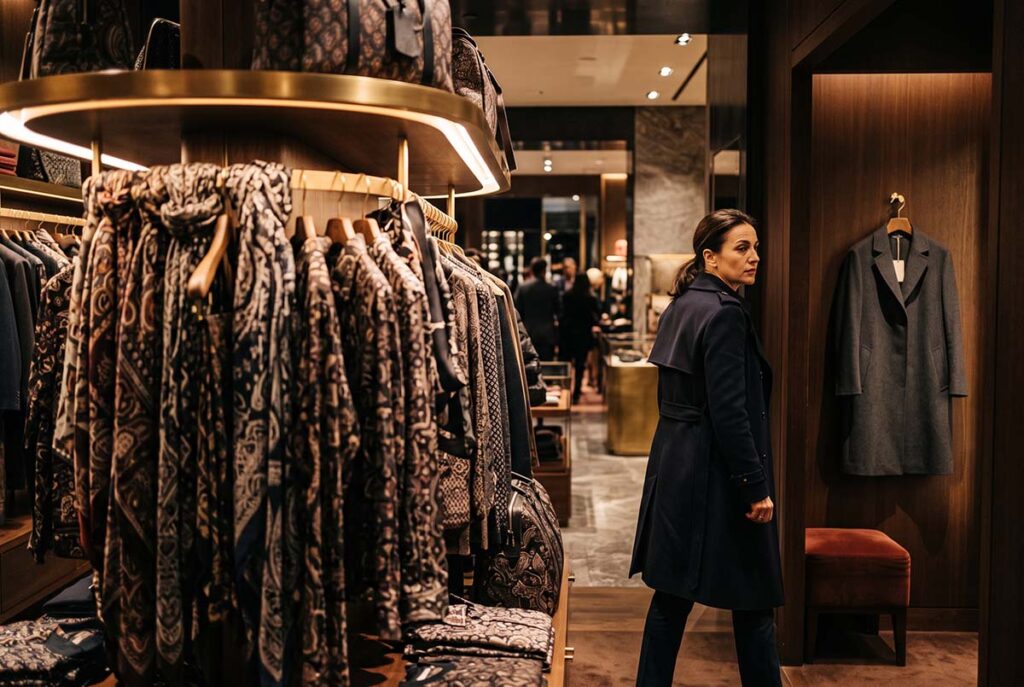
For most of the twentieth century, the entire job of a luxury brand was to be seen. In 1899, sociologist Thorstein Veblen named the mechanism behind that: conspicuous consumption. Wealth only functions as a social signal when someone else can see you spending it. A repeating monogram wasn’t a design choice. It was a broadcast.
Buyers weren’t just buying a coat or a bag. They were buying vertical signaling, a visible marker aimed at the widest possible audience, built to tell strangers on the street exactly where they stood.
That model carried its own flaw from the start. As supply chains scaled globally and counterfeits improved, the same monogram started showing up on a hedge fund manager and a reality TV contestant in the same week. Recognition helps, right up until it doesn’t. Picture a line climbing: on one axis, how many people recognize a brand, on the other, how much it can charge. The two rise together for a while. Then the line hits a wall.
That wall is the ceiling of visibility, and past it, the line doesn’t flatten. It bends downward. Economists have a name for what happens next: the snob effect. Once a status symbol becomes legible to everyone, the people with the most capital abandon it. They don’t want a symbol everyone can read. They want one only their own kind can.
The Move to a Private Whisper

A brand that hits the ceiling of visibility has one move left: stop shouting. To keep raising the price, it has to trade the broadcast for the whisper. That’s horizontal signaling, a marker built to be recognized only by immediate peers, not by a crowd. The logo doesn’t shrink. It disappears entirely.
That erasure is the exact line between loud luxury and quiet luxury, and crossing it means the brand stops trying to prove itself to strangers. The garment becomes illegible to anyone standing outside the circle, and that’s the point. It’s avoiding attention on purpose, so the signal stays intact for the only audience it was ever meant for: people already fluent enough to recognize quality without being told.
Reading that erasure takes something you can’t buy off the rack. It’s called cultural capital: the non-financial assets, education, taste, exposure, that let someone recognize quality without a label telling them what to see. Take the logo away and attention has nowhere else to go but the object itself. The weight of the cashmere. The micron count of the yarn. The way the silhouette falls.
These are the new signals, and they share a property the monogram never had. You can’t fake them, and you can’t mass-produce them.
Paying Yourself, Not the Room
All of this serves a psychological need with a specific name: symbolic self-completion. The buyer isn’t paying for someone else to notice. They’re paying to privately confirm that the product’s quality matches their own standard. The validation loop closes entirely inside one person’s head. It doesn’t need an audience at all.
That’s why a high-net-worth buyer will pay an astronomical price for something almost no one will recognize as expensive. They’re not broadcasting wealth to strangers. They’re confirming their own discernment, to themselves and to the handful of people who already speak the language.
The Same Logic, Wearing a Different Interface

That exact mechanism has already crossed over into B2B software, and it’s worth sitting with how directly it maps. Just as elite consumers walk away from loud logos, the most sophisticated technical buyers now run AI research layers specifically to filter out marketing noise before a human ever gets on a call.
Most software still shouts: gamified onboarding, pop-ups, banners promising a breakthrough around every corner. The tools built for the top of the market do the opposite. They look like the unbranded coat, a keyboard-native, minimalist terminal, nothing decorative anywhere.
That restraint signals a company that already knows exactly what its buyer’s problem looks like and doesn’t need to perform anything to prove it. The plainness works as a filter in both directions. It quietly loses the buyer who needed convincing, and it earns instant trust from the buyer who didn’t.
The Cost of Having Nothing Left to Hide Behind
This strategy comes with a cost most brands never account for. Strip away the logo and you’ve also stripped away the thing that used to absorb the blame when something goes wrong. A minimalist brand promises perfection through its restraint. The buyer expects that perfection. The moment the product fails, expectation and reality collide with nothing to soften the impact.
With no logo to hide behind, the product has no shield. If the quality doesn’t hold, the entire premise collapses instantly, not gradually.
That’s what the $3,000 is actually buying. The buyer gains access to a guarded ecosystem where everyone at the table, from the maker to the person standing next to you, is operating at the same level of discernment.
The Real Currency
The most durable pricing power on earth doesn’t belong to the brand with the biggest logo. It belongs to the one that controls exactly who can read it, who gets filtered out, and who ultimately belongs.
So the next time a product tells you less about itself, not more, it’s worth asking what you’re actually being asked to prove.
Frequently Asked Questions
What is quiet luxury logo erasure?
Quiet luxury logo erasure is the strategy of removing visible brand marks so value is no longer broadcast to everyone. The product becomes less readable to the public but more meaningful to culturally fluent buyers who can decode material quality, restraint, provenance, and craft.
Why does quiet luxury logo erasure create pricing power?
Logo erasure creates pricing power by shifting value from mass recognition to restricted recognition. A visible logo can be copied, diluted, and overexposed. A blank product forces judgment onto material proof and cultural fluency, which makes the signal harder to counterfeit at scale.
What does controlled legibility mean in branding?
Controlled legibility means a brand deliberately limits who can read its value. Instead of making status obvious to everyone, the product becomes meaningful only to people with the right fluency. In quiet luxury, the blank surface isn’t emptiness. It’s a filter.
What is conspicuous consumption?
Conspicuous consumption is the idea that wealth functions as a social signal when it can be visibly spent. Loud luxury used that premise directly. The monogram worked because it made cost readable to strangers, turning the product into public proof of status.
What is the snob effect in quiet luxury?
The snob effect describes what happens when a status signal becomes too widely readable. Once everyone can recognize a mark, the people at the top often abandon it. The signal still communicates money, but it no longer communicates distinction to the group that matters most.
What is cultural capital in luxury branding?
Cultural capital is the non-financial fluency that lets someone read subtle codes others miss. In luxury branding, that means recognizing fabric weight, drape, provenance, construction, and restraint without needing a visible logo. The buyer is paying to be right, not merely to be seen.
What is symbolic self-completion?
Symbolic self-completion is the private psychological loop where a buyer uses an object to confirm an identity standard to themselves. In quiet luxury, the buyer may not need public recognition at all. The value comes from knowing the object matches their own level of discernment.
What is the risk of removing a logo?
The risk is that the product loses its shield. A logo can absorb blame by giving failure somewhere else to go: brand image, public perception, or status theater. Without it, the object itself has to hold up. If it fails, the buyer’s own judgment is implicated.