
American Eagle’s 2025 Sydney Sweeney Great Jeans Campaign
The American Eagle Great Jeans campaign turned a provocative Sydney Sweeney advertisement into a commercially successful but strategically contested case. On August 1, 2025, American Eagle Outfitters rejected the conventional crisis-management playbook, kept every campaign asset active, and treated the controversy as a high-visibility acquisition channel. The decision produced record third-quarter revenue, 44 billion impressions, 700,000 new customers, and greater distinctiveness among younger consumers. It also produced a 40-point partisan approval gap, leaving unresolved whether the brand restored relevance by permanently sacrificing part of its shared cultural meaning.
The ad was forty seconds long. Sydney Sweeney appeared in a denim jacket and recited a definition of genetic inheritance, explaining how biological traits pass from parents to their offspring. Then she looked into the camera and delivered the pun at the center of American Eagle’s 2025 campaign: “My genes are blue.”
The criticism arrived almost immediately. Commentators pointed to the combination of a blonde, blue-eyed actress, a script about inherited traits, and wordplay that depended on the audience hearing “genes” before understanding “jeans.” Academics described the campaign as a dog whistle, connecting its imagery and language to biological determinism and the history of eugenics.
American Eagle kept the advertisement running.
That decision became more consequential than the creative that caused the controversy. The campaign generated record revenue, billions of impressions, and hundreds of thousands of new customers. It also pushed the retailer into a partisan conflict that changed what the brand meant to large parts of its audience. The financial evidence produced one verdict. The brand evidence produced another.
The Wallpaper Diagnosis
American Eagle entered 2025 with a problem more dangerous than a single bad quarter. The company was becoming forgettable. Chief Marketing Officer Craig Brommers described the condition as “generic wallpaper.” The brand remained present in malls, advertising, and the wider retail landscape, but presence wasn’t producing distinction. American Eagle was visible everywhere and memorable almost nowhere.
The financial record gave the diagnosis weight. The company reported an $85 million operating loss and a 5 percent decline in total revenue. Its stock price had fallen 34 percent. The back-to-school season was approaching, leaving the company little time to recover through gradual improvements. By early 2025, American Eagle was failing because it had done nothing memorable.
That diagnosis shaped everything that followed. A safe, product-focused campaign might have protected the company from criticism, but the company had already seen what safe advertising produced: wallpaper. The Sydney Sweeney campaign was designed to break through that condition. Its casting, script, and media strategy gave the public something it couldn’t ignore.
The campaign was a deliberate choice that knew exactly where it was going.
The Engineering of Attention
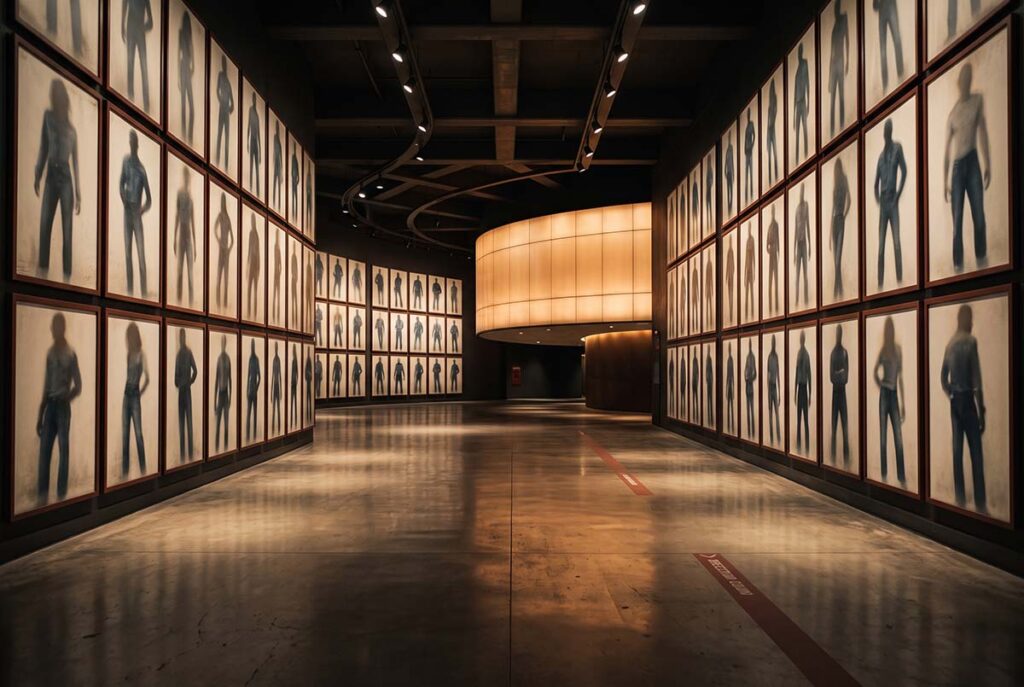
The size of the media buy made the intention visible. American Eagle placed the campaign across transit systems in major metropolitan markets. It used 3D billboards in Times Square and secured a two-week takeover of The Sphere in Las Vegas, turning a 580,000-square-foot venue into a declaration of physical presence.
The company called the strategy high-visibility acquisition. Product advertising had failed to stop the decline, and conventional execution had done little to distinguish the brand from its competitors. American Eagle needed a reason to be argued about.
The “genes” and “jeans” construction supplied that reason. The reference to inheritance invited scrutiny. The casting concentrated the meaning. The minimalist presentation gave the audience little to examine except the actress, the biological definition, and the pun. Each element increased the likelihood that the advertisement would be noticed, interpreted, challenged, and shared. Controversy became part of the campaign’s distribution system. Once the criticism began, every argument about the ad carried it further.
The physical campaign required a substantial media budget. The resulting discourse expanded through systems American Eagle didn’t have to purchase. Critics circulated the imagery while condemning it. Defenders circulated it while attacking the critics. Algorithms had no reason to distinguish between them.
American Eagle had built a machine. The unresolved question was whether it had built a lever or a trap.
The Firestorm Expands
The initial academic criticism quickly lost control of the story. Conservative commentators reframed the backlash as an attack on a harmless fashion advertisement. In their telling, the campaign showed that progressive critics had turned against conventional beauty and were searching for racial politics inside a denim pun. Senator Ted Cruz amplified that interpretation on social media. On August 4, Donald Trump praised Sydney Sweeney and American Eagle on Truth Social, explicitly placing the campaign in opposition to his political opponents.
A denim campaign had become a proxy war.
The escalation soon moved beyond predictable political commentary. Audio associated with the campaign was used to create a defamatory AI deepfake depicting Senator Amy Klobuchar making vulgar remarks about Sweeney’s body. The fabricated video circulated widely enough to contribute to calls for national deepfake legislation. A forty-second fashion ad had become the specific architecture of a federal policy debate.
American Eagle hadn’t created the deepfake. It hadn’t enlisted Ted Cruz, requested Donald Trump’s endorsement, or written the conservative defense of the campaign. The company created the initial friction. Existing political machinery supplied the acceleration. That distinction reveals the limit of strategic control. A brand can design a campaign likely to provoke attention, but it can’t choose every institution, personality, or cause that will eventually attach itself to the controversy.
The advertisement was still running, but participants far beyond the company were writing its public meaning.
Hold the Line

Most crisis-management plans begin with the assumption that reach must be reduced. A company apologizes, explains its intent, removes the disputed material, and waits for attention to move somewhere else. The objective is containment.
American Eagle read that playbook and set it aside.
On August 1, the company issued a brief Instagram statement insisting that the campaign “was and always was about the jeans.” It offered no broad apology and made no substantial concession to the criticism. Every campaign asset remained active. The transit placements stayed in place. The billboards remained visible. The Sphere takeover completed its scheduled run. The executive team’s pause was calculated. Leadership waited for consumer data to show what the controversy was doing to demand.
The noise was being harvested.
That choice is the decision point of the case. The original creative caused the controversy, but the refusal to retreat converted it into an extended acquisition channel. Managing a crisis would have reduced circulation. American Eagle recognized that the standard playbook would destroy something commercially valuable: self-perpetuating reach that no additional media purchase could have replicated. The controversy had become inventory.
That judgment didn’t require the public criticism to be false. It required only that the attention produce more commercial value than retreat would preserve. American Eagle allowed the campaign to continue until the data could answer the financial question. The harder question was whether financial data could measure everything the company had placed at risk.
The Reckoning

The numbers came back with results few crisis-management teams would expect. American Eagle reported record third-quarter revenue of $1.36 billion. The campaign generated 44 billion impressions and attracted 700,000 new customers. Among consumers aged 15 to 25, the company’s uniqueness score rose by 32 points. That increase addressed the problem behind the entire campaign. The brand had been interchangeable. The controversy made it distinctive.
The attention strategy had worked. American Eagle was no longer wallpaper.
Then the partisan data entered the record. YouGov measured a 40-point divide in approval following the campaign’s political escalation. Republican approval rose to 78 percent, while Democratic approval fell to 38 percent. Among older consumers who controlled household budgets, brand equity remained stagnant or declined. The campaign produced two outcomes at once. It attracted 700,000 new customers while changing the brand’s meaning for people who were already familiar with it.
The new customers came in through the firestorm. Part of the existing audience left through the same door.
American Eagle proved that a brand can monetize a culture war without choosing a side, and that the culture war will choose one for you anyway.
The case resists a clean judgment. Calling the campaign a failure would ignore record revenue, increased distinctiveness, and measurable customer acquisition. Calling it an uncomplicated success would treat shared brand meaning as irrelevant once the quarter closed. The campaign solved the problem American Eagle had identified. The company wanted to become memorable, and it did. The unresolved issue was the kind of memory it created and the audience that would carry that meaning forward.
A mass-market brand depends partly on broad cultural permission. Customers don’t need to share the same politics to buy the same jeans. Once a retailer becomes a proxy in a partisan conflict, that shared permission becomes harder to maintain. The commercial results arrived quickly enough to appear in a quarterly report. The cultural consequences operate on a longer schedule.
Revenue can show that attention converted. Customer counts can show that acquisition occurred. Neither metric can fully establish whether the people who arrived through a political firestorm are the same people the brand was built to keep.
American Eagle faced a financial slide and made a precise trade. It converted controversy into commerce, recovered cultural visibility, and accepted that the resulting visibility would no longer be politically neutral. The evidence establishes something narrow and uncomfortable. A company can make the commercially rational decision while creating a brand problem that the income statement cannot resolve.
American Eagle rescued its balance sheet by spending its brand meaning, and the transaction was permanent.
Frequently Asked Questions
What happened with American Eagle’s Sydney Sweeney Great Jeans campaign?
American Eagle launched a denim campaign built around Sydney Sweeney and a genes-and-jeans pun. After accusations of eugenics signaling and escalating political attention, the company kept every advertisement active. The campaign delivered record revenue and substantial customer acquisition, but it also produced a sharp partisan divide in brand approval.
Did the American Eagle Great Jeans campaign work?
Commercially, the campaign worked. American Eagle reported record third-quarter revenue of $1.36 billion, 44 billion impressions, and 700,000 new customers. Strategically, the verdict remains contested because the campaign also created a 40-point partisan approval gap and changed what the brand represented to parts of its existing audience.
Why did American Eagle refuse to remove the campaign?
American Eagle waited for consumer data instead of following the standard crisis-management playbook. On August 1, 2025, it issued a brief statement redirecting attention to the jeans while leaving every planned asset active. Leadership concluded that the controversy was generating self-perpetuating reach and functioning as a customer-acquisition channel.
What did American Eagle mean by “generic wallpaper”?
“Generic wallpaper” was Chief Marketing Officer Craig Brommers’ description of a brand that remained visible but had become culturally indistinct. American Eagle was present in the market yet difficult to distinguish from competing retailers. The Great Jeans campaign was designed to reverse that condition by making the company impossible to ignore.
What is high-visibility acquisition in this case?
High-visibility acquisition describes American Eagle’s strategy of using saturation media and provocative creative to attract new customers rapidly. Transit advertising, Times Square placements, social distribution, and The Sphere created physical reach. The resulting controversy extended that reach through criticism, political commentary, sharing, and algorithmic amplification.
What is attention arbitrage?
Attention arbitrage occurs when a company receives more exposure than it directly purchased because other participants distribute the campaign for their own reasons. Critics, defenders, elected officials, and algorithms repeatedly circulated American Eagle’s advertisement. That unpaid amplification converted a finite media campaign into a much larger and longer-running acquisition system.
What was the crisis-management playbook that American Eagle rejected?
The conventional crisis-management playbook would have called for an apology, clarification, removal of disputed materials, and reduced circulation. American Eagle chose another approach. It issued one product-focused statement, removed nothing, and allowed the controversy to continue while executives evaluated whether public criticism was increasing or suppressing consumer demand.
What should other brands learn from the American Eagle campaign?
The case shows that controversy can generate measurable attention, distinctiveness, and customer acquisition without producing an uncomplicated brand victory. Companies must evaluate more than immediate sales. A campaign can improve the income statement while narrowing cultural permission, politicizing the brand, and changing which customers feel that the company still belongs to them.